


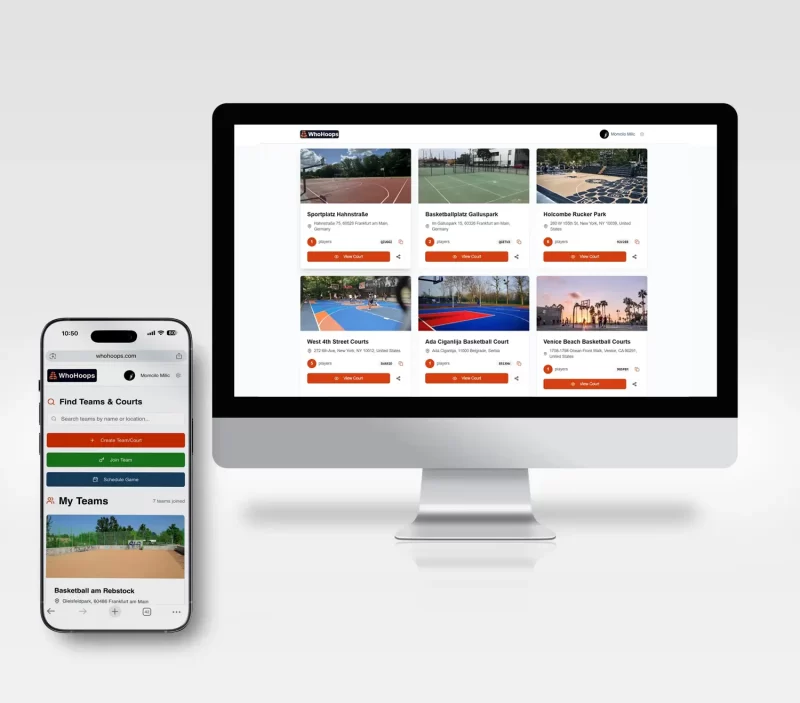
WhoHoops is a full-stack web application for managing basketball teams and games. It allows users to create teams/courts, join existing teams via secret keys, schedule games, and handle player check-ins. The application features a modern React frontend with a Node.js/Express backend, using PostgreSQL for data persistence.
System Architecture
Frontend Architecture
- Framework: React 18 with TypeScript
- Routing: Wouter for client-side routing
- State Management: TanStack Query (React Query) for server state management
- UI Framework: shadcn/ui components with Radix UI primitives
- Styling: Tailwind CSS with custom basketball-themed color palette
- Build Tool: Vite for development and production builds
Backend Architecture
- Runtime: Node.js with Express.js framework
- Language: TypeScript with ES modules
- API Pattern: RESTful API endpoints under
/apiprefix - Database ORM: Drizzle ORM with PostgreSQL
- Session Management: Express sessions with PostgreSQL session store
- Development: Hot reload with tsx for TypeScript execution
Database Architecture
- Database: PostgreSQL (configured for Neon serverless in production)
- Schema Management: Drizzle Kit for migrations and schema changes
Key Components
Data Models
- Users: Basic user profiles with team membership tracking
- Teams: Basketball teams/courts with location, player count, and unique secret keys
- Games: Scheduled games linked to teams with participant check-in functionality
UI Components
- Modals: Create team, join team, and schedule game workflows
- Cards: Team and game display components with interactive features
- Header: Navigation with branding and user profile
- Toast System: User feedback for actions and errors
Data Flow
- User Authentication: Session-based system – each browser session gets a unique user ID
- Team Management: Users can create teams (auto-assigned secret keys) or join via secret keys
- Game Scheduling: Teams can schedule games with date/time selection
- Check-in System: Players can check in/out of scheduled games
- Real-time Updates: TanStack Query handles cache invalidation and data synchronization